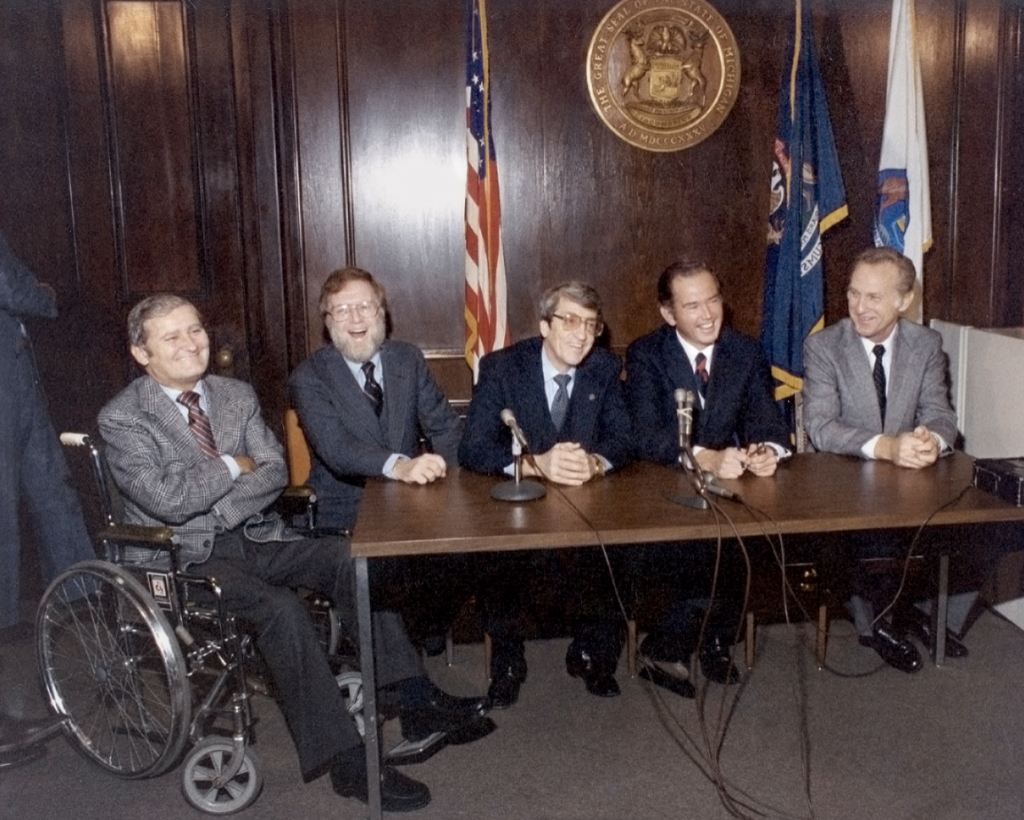
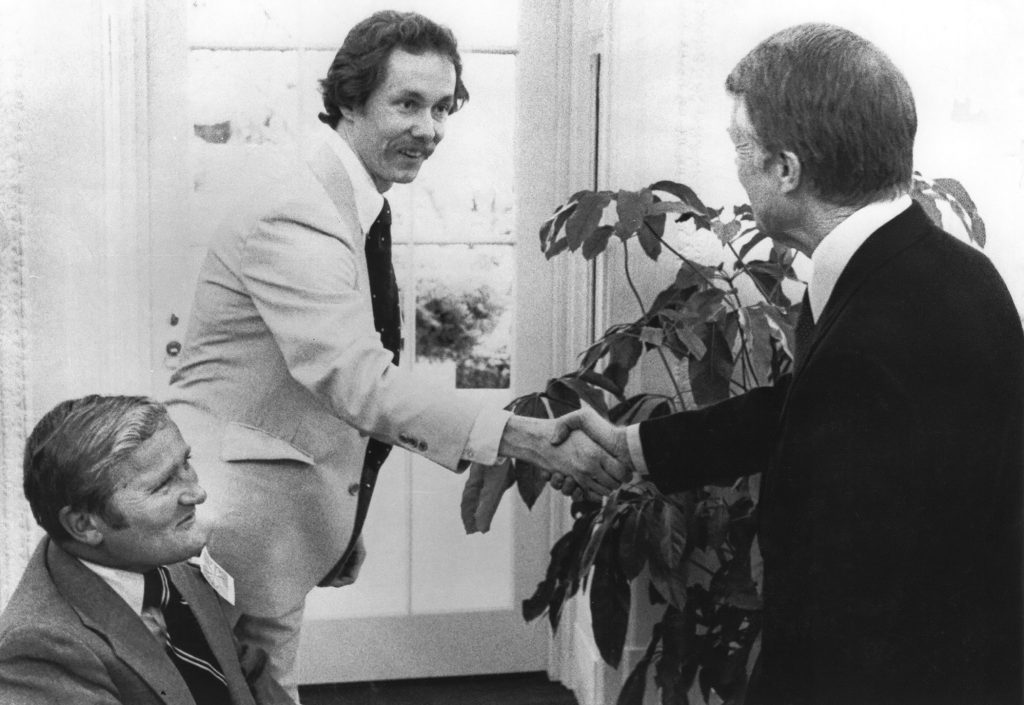
Dan DeGrow has had a long, varied and distinguished tenure as a public servant in Michigan, as a state House and Senate member, Senate Majority Leader, and then as head of the St. Clair County Regional Education Services Agency. It all started when some older lawmakers from the other party invited him to dinner – a reminder that personal relationships are vital to good government.
Don Gilmer, a Republican from Augusta, was a giant in Michigan politics and government, serving 22 years in the state House of Representatives, then as state lottery commissioner, and state budget director. Gilmer died on Aug. 12, 2019 of complications from Lewy Body Dementia. Perhaps the trait for which he will be most remembered was his ability to bring people with diverse interests, competing viewpoints, and both major parties together to craft good public policy. His longtime friend and colleague, former Michigan House Speaker Paul Hillegonds, delivered the eulogy at Gilmer’s memorial service.
Democrat Bob Emerson and Republican Dan DeGrow served together in the Michigan House and Senate for many years (before term limits restricted the ability of lawmakers to get to know their jobs and their colleagues). They rose to leadership positions, and learned how to compromise and collaborate to make Michigan work a little better.
Fred Fry had years of experience working through difficult issues in Lansing. So did Tom Cleary. They represented opposing interests on legislation that would never make headlines, but was very important to the interest groups they represented. Rep. Vern Ehlers had the job of adjudicating this issue – and worked it out.
During the late 1970s, Michigan’s business and labor groups found themselves fighting over worker and unemployment compensation policies and benefits. Employers were concerned that it was too easy to access benefits that were, in some cases, too high and in others too low. Worker groups did not want to give up benefits they had fought to receive, but recognized some discrepancies needed to be addressed.
It took willing legislative leaders, a governor interested in compromise, and innovative approaches to reach a solution that eventually gained strong legislative approval. This report on the process is a slightly revised version of a 1981 speech delivered by Richard Studley, then manager of Taxation and Labor Affairs for the Michigan State Chamber of Commerce (and later president of that body) on behalf of State Senator Robert VanderLaan, R-Kentwood, who was the Senate Minority Leader when the reforms were approved, at the Journal of Law Reform Alumni banquet, Ann Arbor, Michigan.
It’s important for governments to talk with each other. Federal to state, state to locals. And for those involved in policy to develop relationships. Longtime legislative staffer, then lobbyist, and co-founder of MiGoodGovernment, Charles “Fritz” Benson tells how that works.
Of all the legislative reforms adopted by the Michigan Legislature over the past 50 years, the complete revision of public education funding and financing, as reflected in voter approval of Proposal A in 1994, is probably the most significant.