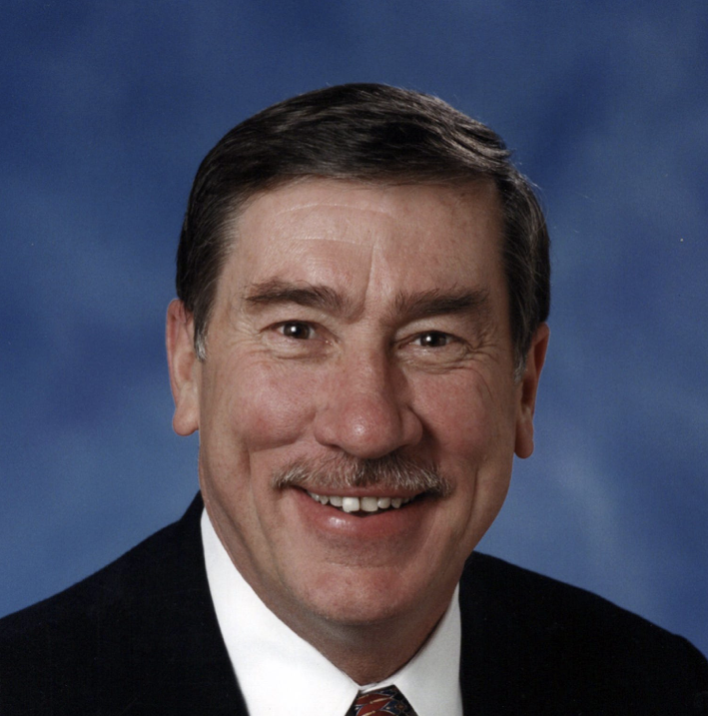
Lynn and the entire Gilmer family, our hearts and prayers go out to you. The life of a public servant often requires time away from family. We thank you for sharing Don with us—his friends, colleagues, constituents—indeed, the people of our state. Don personified public service—as a county commissioner, county executive, state lottery commissioner and budget director and state representative. His 22 years in the Michigan House are testimony to the mistake we voters made with our adoption of legislative term limits. Don never forgot his roots. His upbringing and experience on the family farm shaped who he was and how he served. He was honest and earnest. His word was his bond. He sought elected office, not for power or prestige, but to leave the communities and state he served better places. He was humble and hardworking. His wonderful sense of humor was self-deprecating, a reminder to us, his colleagues, to stay grounded. He did his legislative homework and spoke to his positions persuasively and with passion, while always upholding a high standard of civility. He surrounded himself with smart staffers who loved working with him. He was principled, pragmatic, first and foremost a problem-solver who sought common ground within our Republican caucus, with Democratic members across the aisle, and even with what we House members referred to as the lower chamber, the Michigan Senate. As a member of the Appropriations Committee which wrestled over the state’s annual budgets, Don believed good policy should determine a budget’s line items. He championed K-12 and higher education. He believed passionately that making education a priority would unlock doors of opportunity, build a healthy economy and strengthen our system of representative government. He believed our government had a responsibility to fund human services for people in need. He understood that budgets ought to be honestly balanced and in good times, funds should be set aside for rainy days.
On at least three very contentious occasions I can recall, he voted to raise taxes—with the conviction that we must be willing to fund public services we wanted and were needed for the common good. Yes, Don was principled but knew that problem-solving required a willingness to compromise. I don’t think he invented the expression, but occasionally he would ask us to support a negotiated agreement saying “Sometimes you have to rise above principle and do the right thing.”
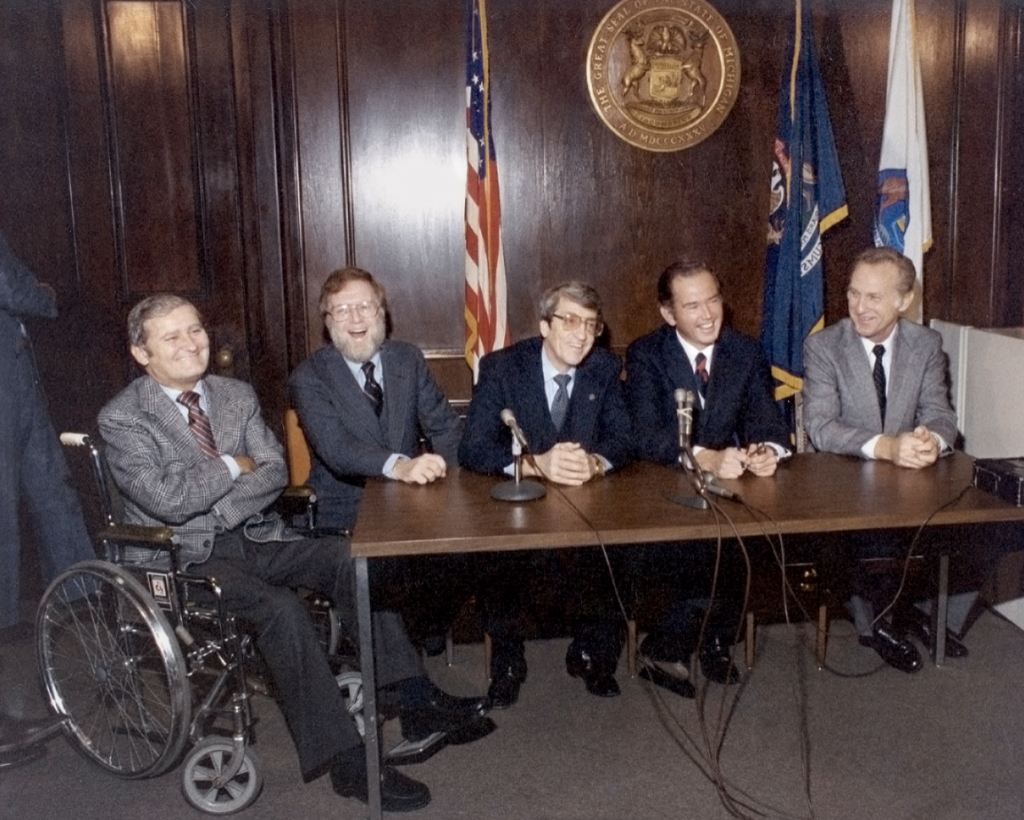
When, in January, 1993, the House found itself evenly divided with 55 Democratic and 55 Republican members, I knew Don had earned the kind of bipartisan respect and trust which would help us navigate shared power. He nominated me to serve as co-speaker, and I appointed him to co-chair the House Appropriations Committee. The other co-chair had been the long time, powerful chairman who once tried to have Don taken off his committee—this after Don had introduced a resolution rejecting a proposed 16% legislative pay raise at a time when 10% budget cuts loomed. Adding to the challenge of shared leadership, I asked Don to welcome to his committee a member of the Republican “no” caucus who rarely, if ever, had voted for an appropriations bill. Don’s response was: I guess I’ll have to help him learn how to vote “yes.” And he did.
Here let me share the reflections of another colleague, Bill Bobier, who also served on Don’s committee. Bill wrote, “I feel fortunate that the journey through life has been filled with folks who have… enhanced and altered my path so much for the better. Don was an extraordinary mentor. For the six years I served on the appropriations committee, he… facilitated my growth and understanding of the budget and political process with patience and good humor….”
The transition to shared power was no small task for Don. The committee now included eight new Republican members who were as diverse as the big tent allowed. He was more than up to the task, and when the GOP gained control after the 1994 elections, he continued his fair and even-handed leadership. Bill continued, “No account of his tenure as approps chair would be complete without remembering the after-hours gatherings in Don’s spacious Capitol office. In those surroundings was the growth of a committee camaraderie that led to what I have come to believe was the height of legislative fiscal prudence. Around that table, problems and solutions to some of the state’s more vexing issues were openly discussed with no small amount of beer and vigorous cajoling. Under his leadership developed the mutual trust and respect necessary for real accountability in the budget process.”
I’ll add to Bill’s account noting that Don’s office was where a bipartisan group of Michigan House committee leaders negotiated fundamental building blocks of school finance reform, a complex problem which had gone unresolved by our state’s electorate and policymakers for over two decades. In the intense negotiations over the course of months, I’m told it was Don who enforced the rule stating when a particular obscenity had been uttered 10 times by those in the room, the meeting had to be adjourned until tempers cooled. His knowledge and temperament were key in achieving an historic agreement, leading to voter adoption of Proposal A.
The cruel disease which took Don from us brings to mind an age-old question: “Why does God allow such bad things to happen to good people?” As Don’s self-awareness and awareness of the family and friends he loved faded, I had the opportunity to visit with him on a couple of occasions—and was reminded that goodness and grace can shine even in the darkest of times. What I witnessed was the incredibly deep, unconditional love and support given Don by Lynn, the love of his life.
Then there was the last time we were together this summer, a day I will always treasure. My spouse Nancy and I, Lynn and Don sat on our South Haven deck enjoying a glorious, sunny afternoon. Don was at first anxious and confused, but then started to enjoy those precious moments, quietly smiling as Lynn, Nancy and I shared Lansing memories. As he and Lynn were preparing to depart, Don turned to me and said, “I wish you had run for governor.” Those were his words, but what I believe Don was actually saying to me and everyone here today is this: “I am grateful for the journey we’ve traveled together. I am thankful for having had the opportunity to strive for a better Michigan.”
In turn, we have much to celebrate and be thankful for today. Don has left with us a lifetime of principled public service which, in these polarized times, is so important for us to honor—and embrace—as we carry on.
Thank you, Don. God’s eternal peace be with you.
(Paul Hillegonds is a Holland Republican who was elected to the Michigan House in 1978. He served as co- speaker of the House in 1993-94 and as speaker in 1995-96. After a nine-term legislative career, he was named president of Detroit Renaissance, a nonprofit organization with the purpose of stimulating economic development in Detroit. Most recently, Hillegonds was vice president of community and government relations for DTE Energy.)